A) A simple predator-prey model explains the results.
B) A simple plant-herbivore model explains the results.
C) Raptor activity has no effect on the outcome.
D) Complex variables are involved.
E) Manipulation of experimental plots stopped cyclic changes in population densities.
G) B) and E)
Correct Answer

verified
Correct Answer
verified
A) draining nutrients from hosts.
B) making hosts more vulnerable to predation.
C) lowering birth rates and raising death rates.
D) causing sterility
E) all of these.
G) A) and B)
Correct Answer
verified
Correct Answer
verified
A) home range of an animal.
B) preferred habitat for an organism.
C) functional role of a species in a community.
D) territory occupied by a species.
E) feeding levels of a species.
G) C) and E)
Correct Answer
verified
Correct Answer
verified
A) commensalism.
B) competitive exclusion.
C) mutualism.
D) facultative obligate mutualism.
E) parasitism.
G) A) and C)
Correct Answer
verified
Correct Answer
verified
A) mutualistic associations.
B) commensalism.
C) resource partitioning.
D) mutualistic associations and resource partitioning
E) mutualistic associations, commensalism, and resource partitioning.
G) A) and E)
Correct Answer
verified
Correct Answer
verified
A) the biosphere.
B) a community.
C) an ecosystem.
D) a niche.
E) an ecotone.
G) B) and C)
Correct Answer
verified
Correct Answer
verified
A) fluid filled pustules that are slow to heal.
B) nausea.
C) dizziness.
D) death.
E) all of these.
G) B) and D)
Correct Answer
verified
Correct Answer
verified
A) some pathogensi
B) a few birds
C) a few plants
D) some flatworms and roundworms
E) all of these
G) B) and E)
Correct Answer
verified
Correct Answer
verified
A) resource partitioning
B) competition
C) predation
D) parasitism
E) parasitoidism
G) B) and D)
Correct Answer
verified
Correct Answer
verified
A) mimicry
B) display behavior
C) warning coloration
D) chemical defenses
E) camouflage
G) A) and B)
Correct Answer
verified
Correct Answer
verified
A) isolation.
B) competition. 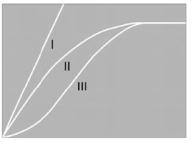
C) habitat preference.
D) physiological adaptation.
E) niche removal.
G) D) and E)
Correct Answer
verified
Correct Answer
verified
A) catbird
B) cowbird
C) magpie
D) Kirtland warbler
E) blue jay
G) D) and E)
Correct Answer
verified
Correct Answer
verified
Showing 41 - 52 of 52
Related Exams